
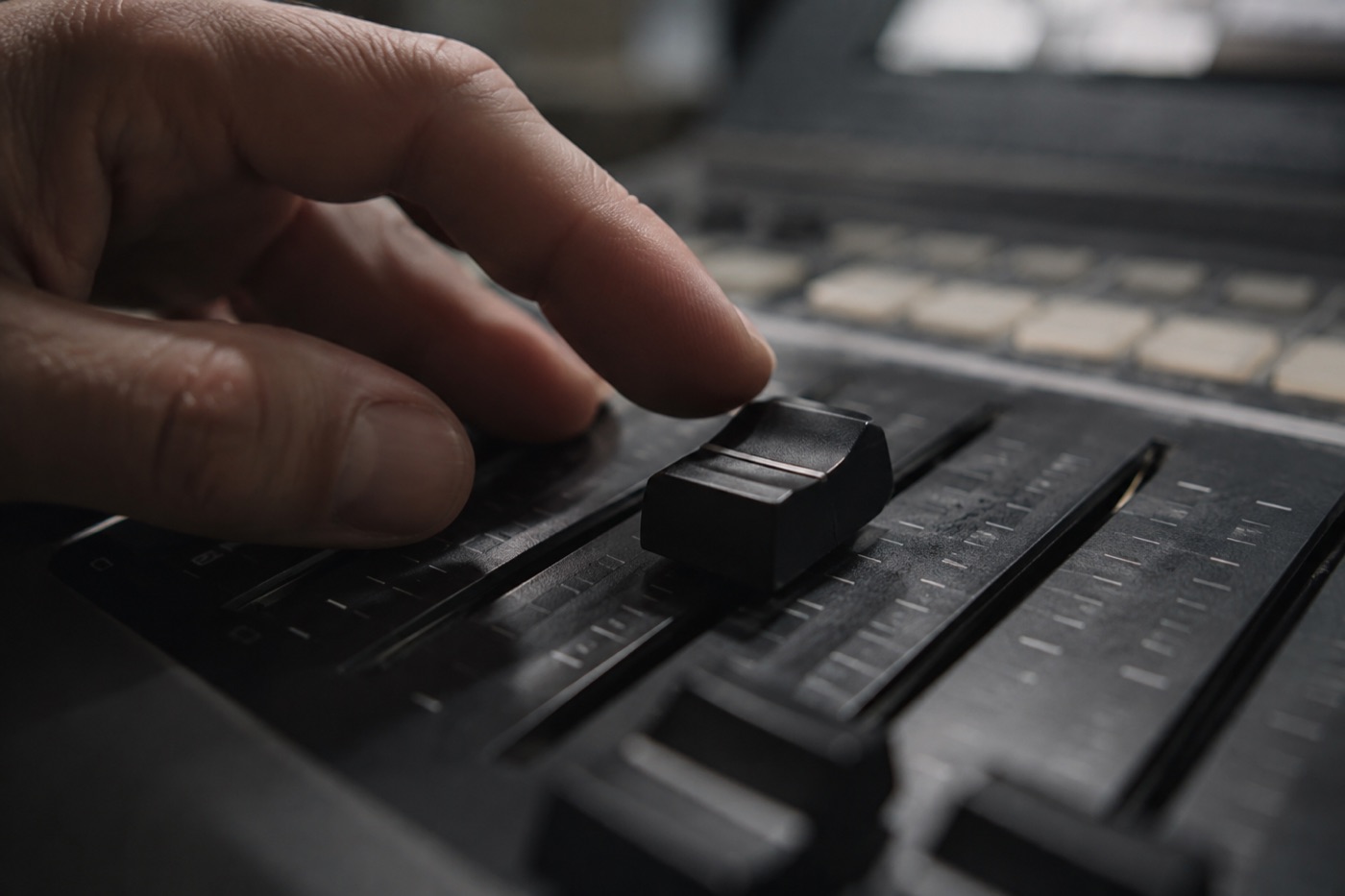
A live show already depends on technology: lighting consoles, click tracks, playback systems, microphones, and safety controls. The presence of automation does not make a performance fake. What matters is whether the tools support the people in the room or flatten the event into a recording that happens to have an audience standing nearby.
The most valuable live decisions are responsive. A drummer holds a beat because the crowd is with it. A comedian changes a transition after hearing the room. A lighting operator notices a performer move into shadow and adjusts. Those judgments depend on attention to a particular night. They are difficult to reduce to a preset because the point is that this gathering will not occur again in exactly the same way.
There are good uses for automation: repeatable safety cues, accessibility captions, backup systems, and preparation that lets a small crew operate a complex show. There are weaker uses: synthetic applause, a simulated spontaneous moment, or a generated performer presented as someone responding to the audience when nobody is.
A fair test is whether the audience understands what is live and whether the technology gives performers and crew more control. A show does not become less human because a machine handles a cue. It becomes less honest when the machine is used to counterfeit the relationship between the stage and the room.
This is perspective, not a reported interview. AI-assisted drafting and original generated editorial artwork were reviewed for publication; the artwork does not depict a documented event.