
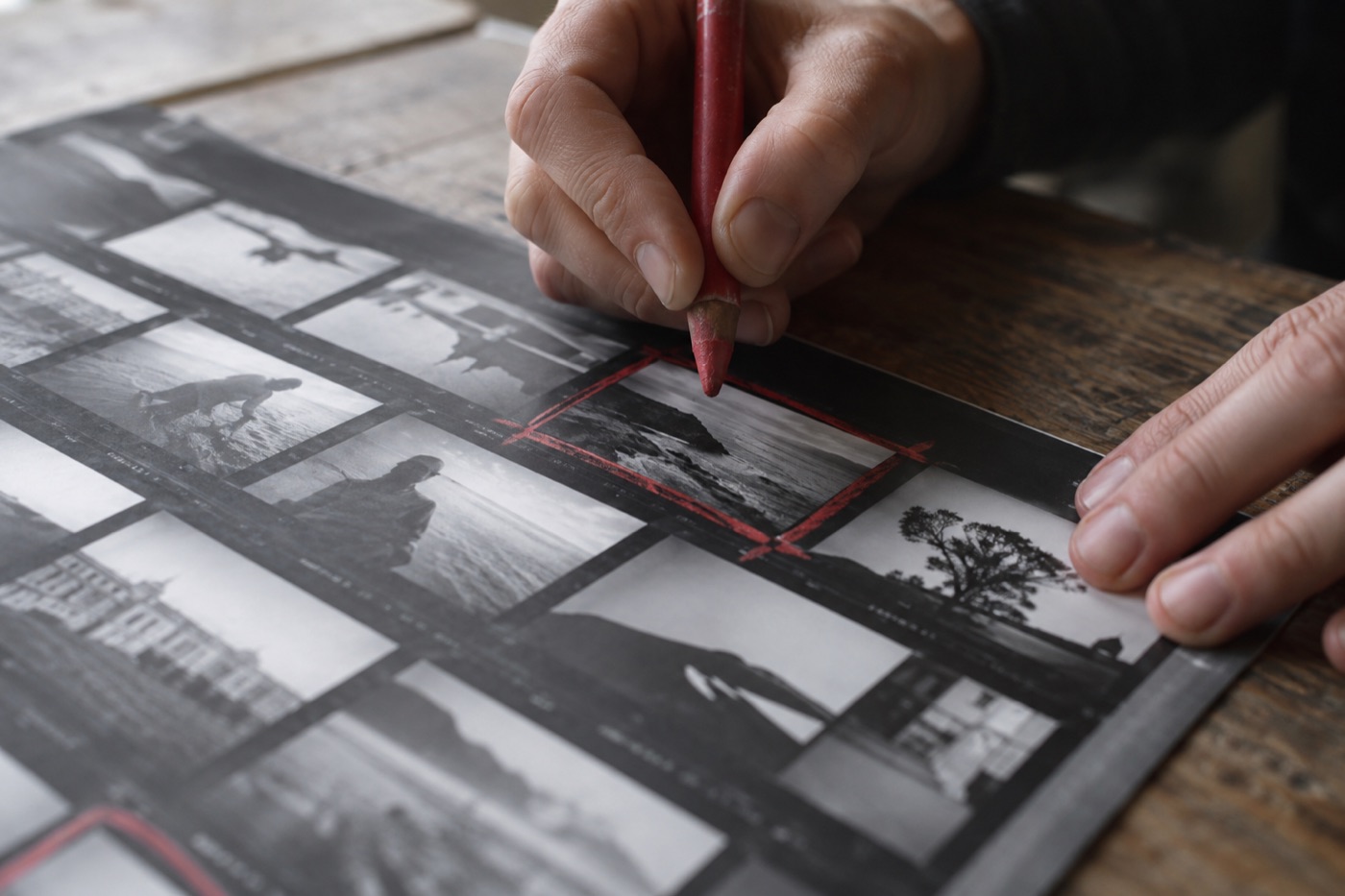
A camera is already a highly automated machine. Exposure, focus, stabilization, and color can all be shaped by software. None of that has made photography a meaningless act. A photographer chooses where to stand, when to wait, what relationship to build, and which frame deserves to survive the edit. The machine helps produce an image; the person gives it a reason to exist.
Generative tools change the boundary because they can produce scenes without a witnessed event. That can be useful in illustration, concept work, or fantasy. It is a different promise from a documentary photograph. Audiences should not have to guess whether a portrayed place or person existed in front of a lens. Context and labeling matter especially when an image is offered as evidence.
For working photographers, the useful applications may be less dramatic than creating a whole scene: sorting thousands of frames, making contact sheets searchable, removing a sensor spot, or preparing delivery versions. The choice still belongs to the person who was there and can explain what the image represents.
There is no need to make the camera sacred or the computer suspect. The standard is whether the final work is honest about its method and whether the human decisions behind it remain visible. An image can be technically perfect and still say nothing. The photographer’s eye is the part that notices what is worth saying.
This is perspective, not a reported interview. AI-assisted drafting and original generated editorial artwork were reviewed for publication; the artwork does not depict a documented event.