A song may take months to write and record. The post announcing it can vanish from a feed in hours. That mismatch has quietly rewritten the job description for independent artists. Alongside the work of making something worth hearing, a musician is expected to plan campaigns, crop video, write captions, answer comments, build mailing lists, and interpret analytics. None of those tasks is automatically worthless. But together they can consume the time, money, and attention that made the music possible.
The useful question about AI is not whether it can produce more content. We already have more content than any person can absorb. The useful question is whether it can give a working artist some time back. Drafting a posting calendar, transcribing an interview, sorting a photo archive, or preparing alternate copy for a release announcement can be assistance. The artist should still decide what the work means, what to reveal, and what to leave unsaid.
This is not a free pass to replace every collaborator. A designer, photographer, or editor may have been doing that auxiliary work for pay. The balance changes with budgets and relationships. A band with fifty dollars for promotion is not making the same decision as a corporation eliminating an art department. Honest conversation starts with the actual economics, not a purity test imposed on whoever has the least money.
Our standard is simple: automate the repetitive work first. Pay people where a human perspective makes the work better and where a fair budget exists. Protect the hours in which a musician rehearses, listens, fails, revises, and finds a sound. Those hours are not a marketing inefficiency. They are the point.
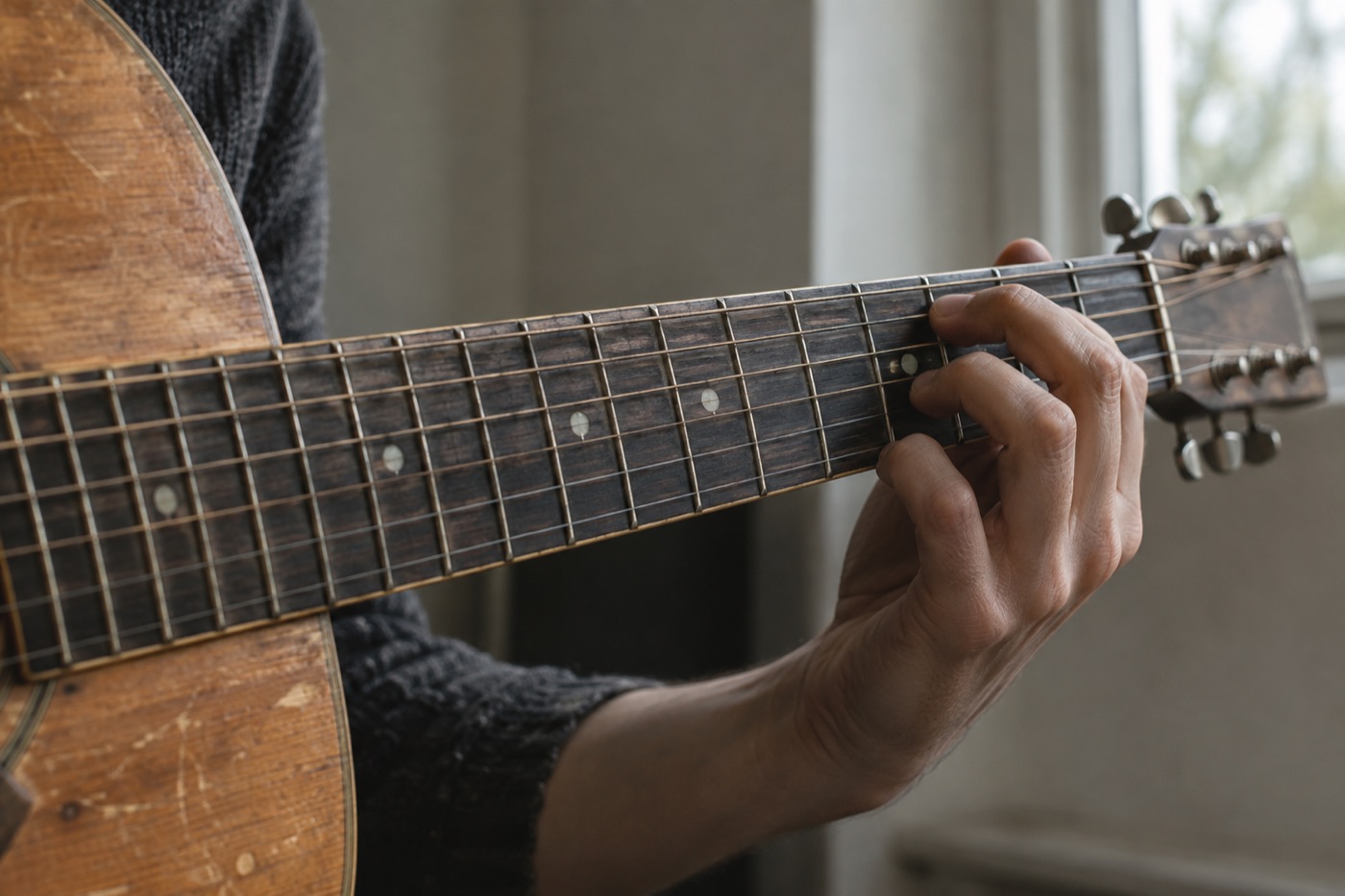
This is perspective, not a reported interview. AI-assisted drafting and original generated editorial artwork were reviewed for publication; the artwork does not depict a documented event.